
Safety Barriers
Protect People, Racking and Equipment From Forklift Traffic
One forklift strike can damage a wall, knock a rack out of plumb or injure a worker. JB Equipment supplies and installs heavy-duty steel safety barriers, guard rails, bollards and handrails that separate traffic from the people and assets you need to protect.
Choose structural steel barriers with a top rail and a mid-rail for long runs along walls and racking, modular guard rails for aisles, bollards for corners and doorways, and handrails and self-closing gates for walkways, mezzanines and ladderways. Every product page lists part numbers, sizes and specifications.
- Supply and installation in the GTA and beyond
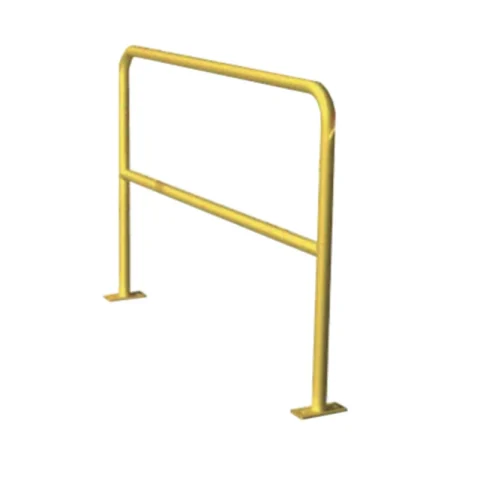
- 42 in barriers with top rail and mid-rail
- Floor kick plate on request
- Custom lengths available


Barriers, Guard Rails and Bollards
Heavy steel protection that stands up to forklift and pallet truck traffic around walls, racking, doors and equipment.
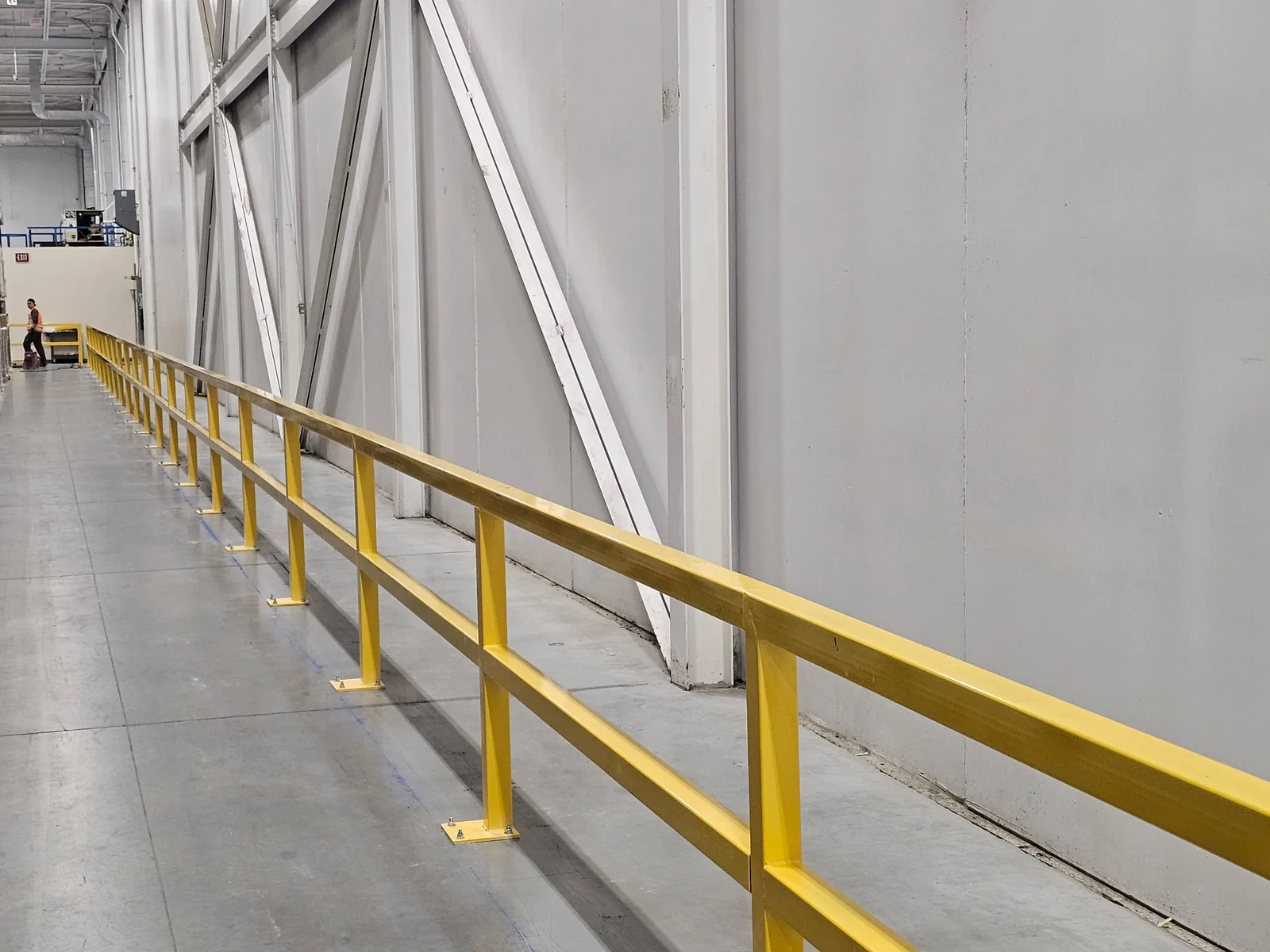
Structural Steel Safety Barriers
42 in high · top rail and mid-rail · 24 to 96 in
Rigid 3 in structural tube barriers with 8 × 8 in base plates. Floor kick plate available on request.
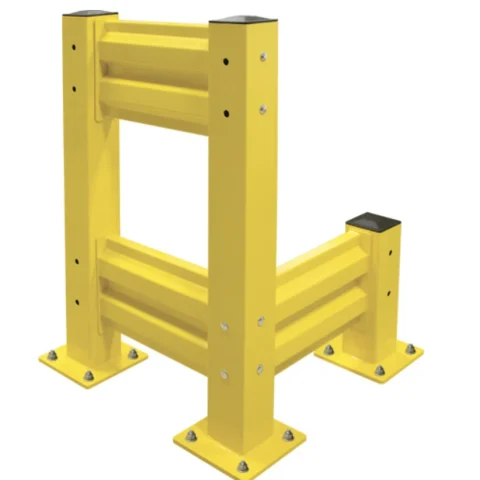
View details →Industrial Safety Guard Rails
Modular rails 24 to 120 in · single or double height
Impact rails and posts that protect walkways, racking ends and walls from forklift traffic.
View details →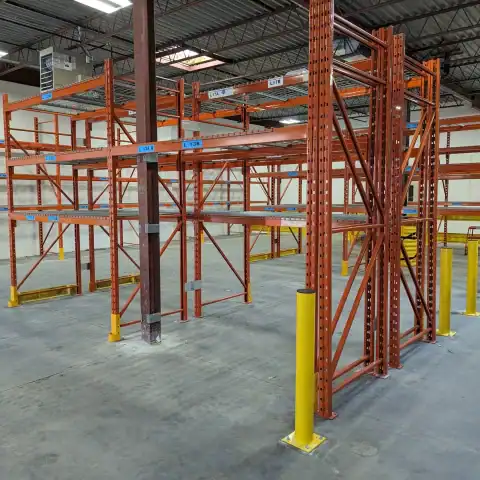
Warehouse Safety Bollards
39 in high · 4-3/4 in tube · 8 × 8 in plate
Freestanding posts for corners, doorways, racking ends and equipment.
View details →Recent Installations: Markham and Barrie
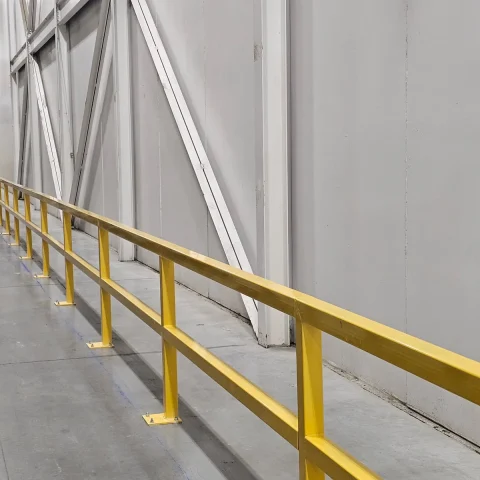
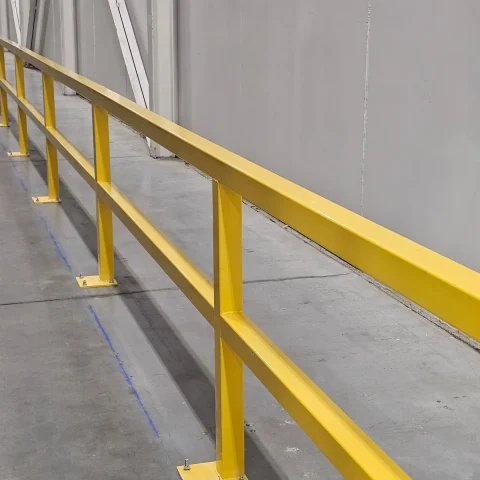
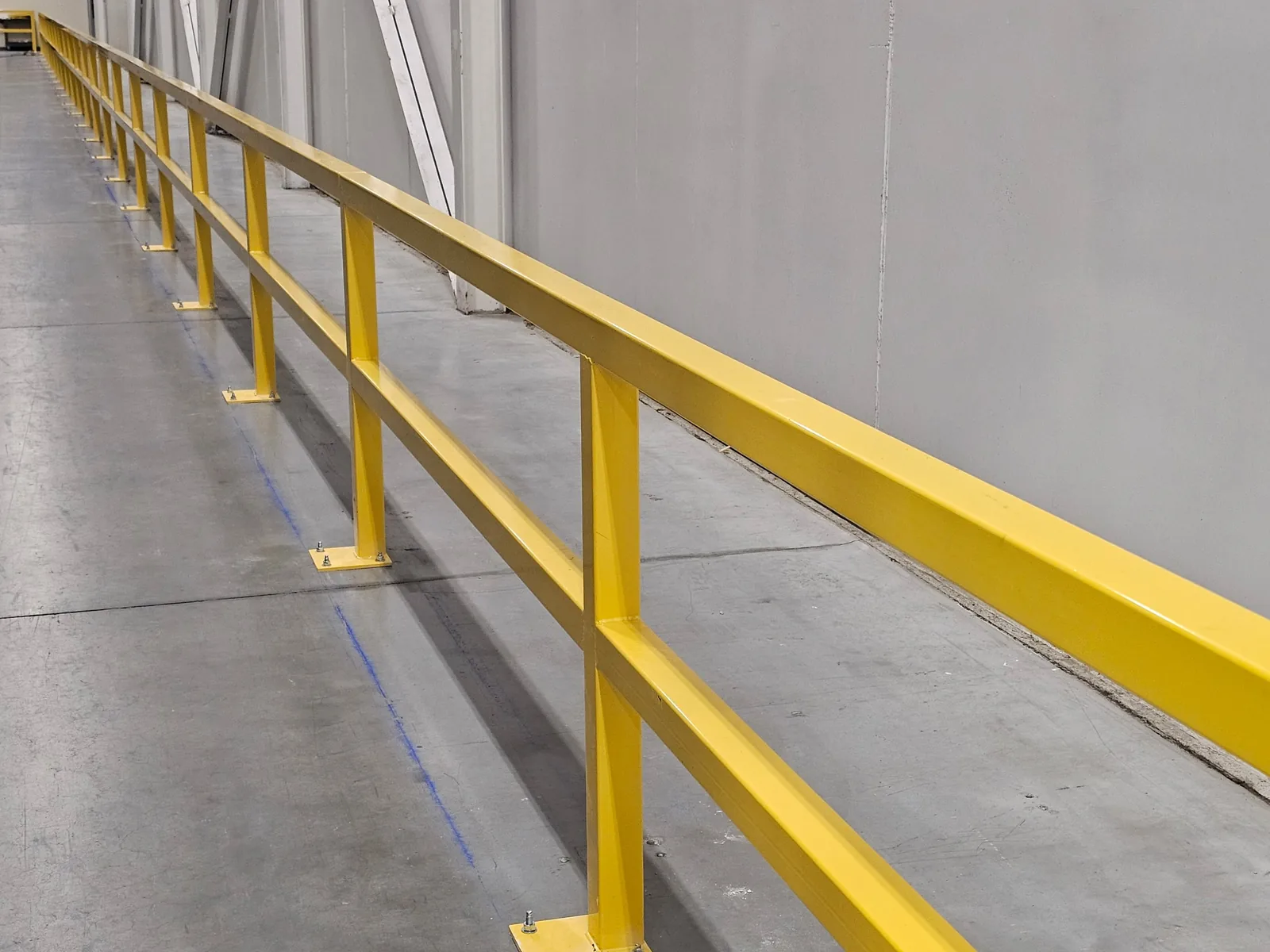
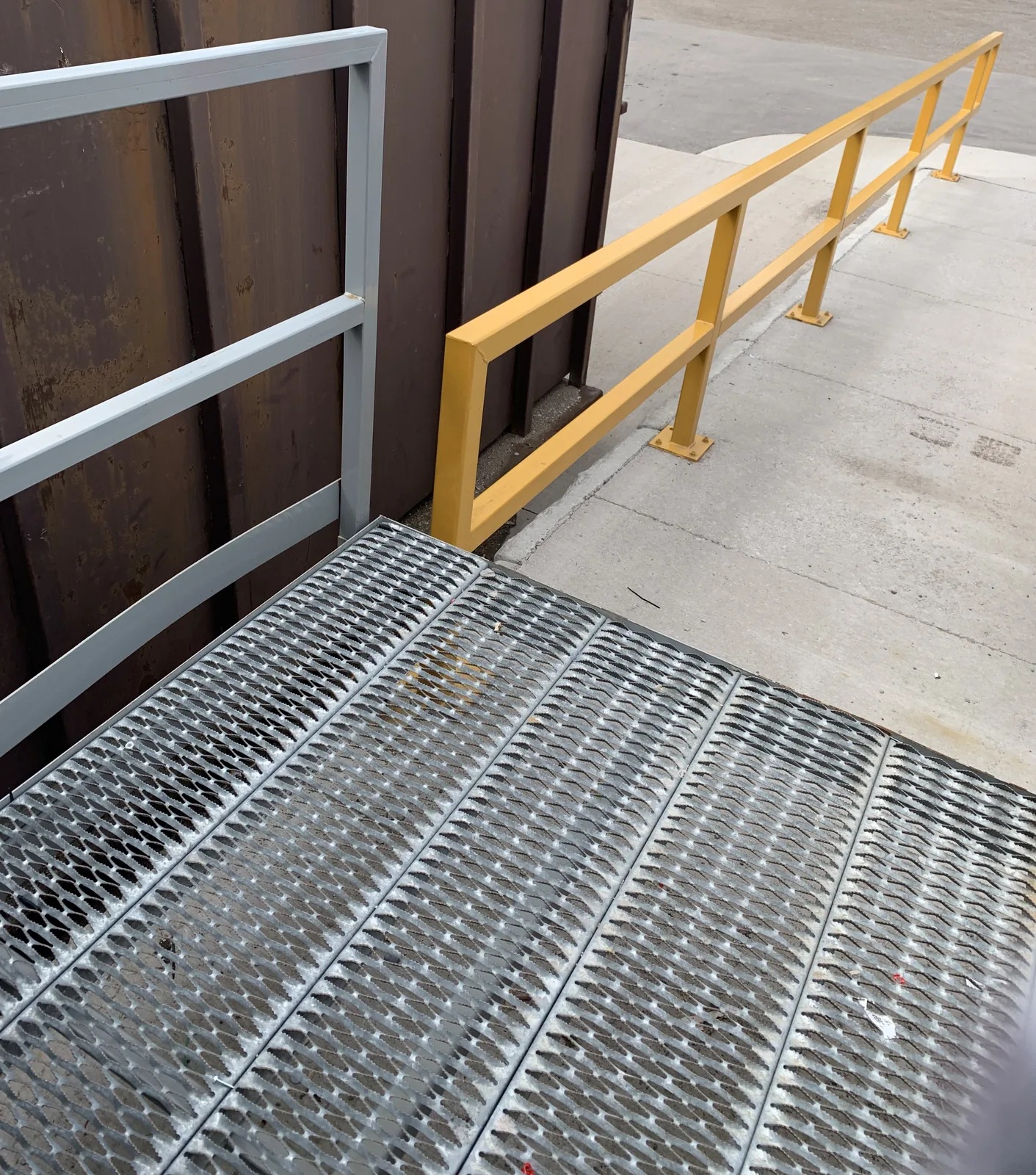
In Markham, we installed a long run of structural steel safety barriers along a warehouse wall. In Barrie, the same barrier guards an outdoor concrete walkway beside a steel platform. Each section has a top rail and a mid-rail on 3 in structural tube posts, and every post is bolted down through an 8 × 8 in base plate.
Handrails and Safety Gates
Fall protection and pedestrian guarding for walkways, mezzanines, docks, ladderways and platforms.
Steel Safety Handrails
42 in high · 21 in mid-rail · 24 to 120 in
Welded pipe handrails for walkways, mezzanine and dock edges and machinery.
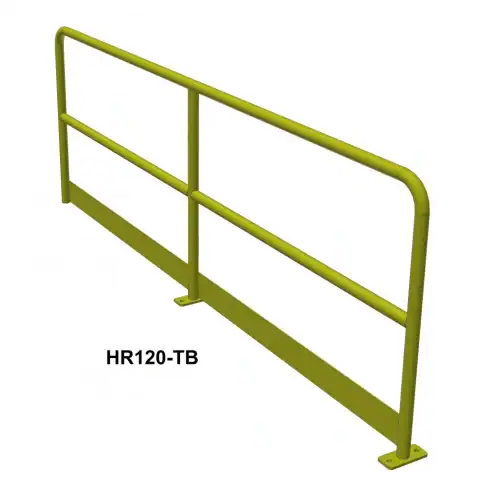
View details →Safety Handrails with Toe Boards
42 in high · mid-rail · 5 in toe board
Handrails with a toe board that stops tools and product from sliding off elevated edges.
View details →Safety Handrail Gates
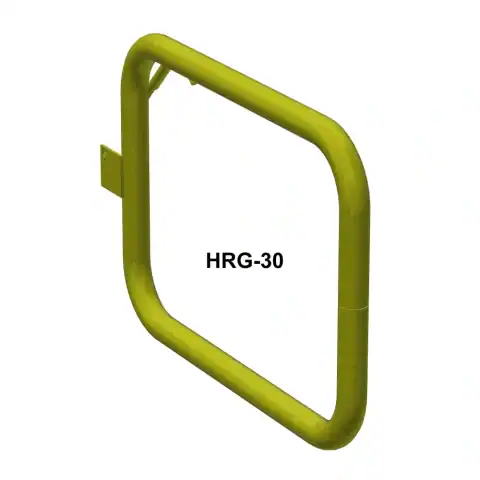
30 and 36 in · left or right hand
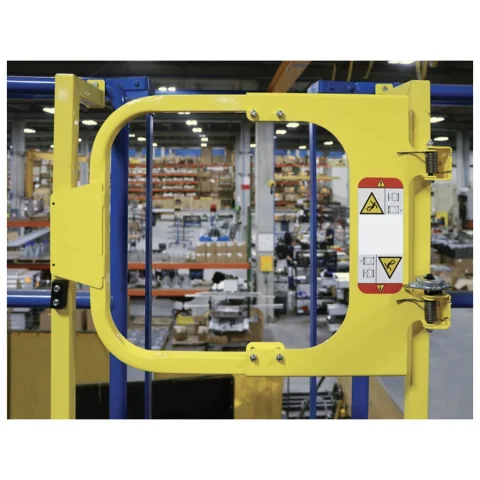
Hinged gates that bolt on to create an access point in a handrail run.
View details →Self-Closing Ladder Safety Gates
Fits 15 to 50 in openings · three finishes
Spring-loaded gates that close behind workers at ladderways, mezzanines and platforms.
View details →Temporary Barriers and Signs
Portable barriers and signs for maintenance, cleaning and short-term hazards.
Safety Barrier Comparison
See each product page for every part number and full specifications.
| Product | Type | Height | Construction | Sizes | Best for |
|---|---|---|---|---|---|
| Structural steel safety barriers | Fixed barrier | 42 in, top rail and mid-rail | 3 in structural tube, 8 × 8 in plates | 24 to 96 in, custom on request | Walls, racking and long runs |
| Industrial safety guard rails | Modular impact rail | 12 in rail profile, single or double height | Steel rails, 5 × 5 in posts | 24 to 120 in | Forklift aisles, racking ends |
| Warehouse safety bollards | Single post | 39 in | 4-3/4 in tube, 8 × 8 in plate | Single posts | Corners, doorways, equipment |
| Steel safety handrails | Handrail | 42 in, 21 in mid-rail | 1-1/2 in pipe | 24 to 120 in | Walkways, mezzanine and dock edges |
| Handrails with toe boards | Handrail and toe board | 42 in, 5 in toe board | 1-1/2 in pipe | 24 to 120 in | Elevated edges |
| Safety handrail gates | Hinged gate | Matches handrails | 1-1/2 in pipe, bolt-on hinges | 30 and 36 in | Access points in handrail runs |
| Self-closing ladder gates | Spring gate | Top and mid-rail | Yellow, galvanized or stainless | 15 to 50 in openings | Ladderways, mezzanines, platforms |
| Mobile barrier | Portable | 37 to 39 in | Steel and aluminum | Expands to 11 or 15 ft | Temporary work zones |
How to Plan Safety Barriers
- Map the trafficWalk the floor and note where forklifts and pallet trucks turn, reverse and cross pedestrian routes. That is where barriers do the most good.
- Match the barrier to the riskUse structural barriers, guard rails or bollards where vehicles could make contact, and handrails where the risk is people walking or falling.
- Protect the ends and cornersRack ends, building columns, doorways and corners are hit most often. Bollards and short barrier sections work well here.
- Leave room to deflectSet barriers a little away from what they protect, so an impact is absorbed before it reaches the wall, rack or machine.
- Plan for kick platesAdd a floor kick plate where small items, pallets or feet could slide under the bottom rail.
- Check the floorBarriers bolt to concrete. Let us know the slab condition and any in-floor heating or utilities before installation.
Frequently Asked Questions
What is the difference between a safety barrier, a guard rail and a handrail?
Safety barriers, guard rails and bollards are built to absorb impacts from forklifts and pallet trucks, so they protect walls, racking and equipment. Handrails are lighter pipe rails that keep people from falling or walking into hazards, for example along mezzanine edges, docks and walkways. Many facilities use both: impact protection on the traffic side and handrails on the pedestrian side.
Do you install safety barriers?
Yes. We supply and install safety barriers, guard rails and handrails across the GTA. Recent installations include a long run of structural steel barriers along a warehouse wall in Markham, Ontario, and an outdoor walkway barrier in Barrie, Ontario.
Can I add a kick plate to a barrier?
Yes. Our structural steel safety barriers have a top rail and a mid-rail as standard, and we can add a floor kick plate on request. For elevated edges, our safety handrails with toe boards include a 5 in toe board.
How are safety barriers anchored?
Structural barriers and bollards have heavy-duty 8 × 8 in base plates that bolt to a concrete floor. Guard rail posts include mounting hardware, and floor anchors are sold separately. Tell us about your floor and we will recommend the right anchors.
What lengths are available?
Structural steel barriers come in 24 to 96 in lengths, and guard rails and handrails in 24 to 120 in, so you can combine sections to fit almost any run. Other sizes are available on request.
How do I plan a barrier layout?
Measure the run you need to protect, then mark doorways, pedestrian crossings, corners and rack ends. Send us the measurements or a sketch, and we will recommend the barrier types and lengths and quote supply and installation.
Planning a barrier run or a full facility layout?
Send us your measurements or a sketch, and we will recommend the right barriers and quote supply and installation anywhere in the GTA.