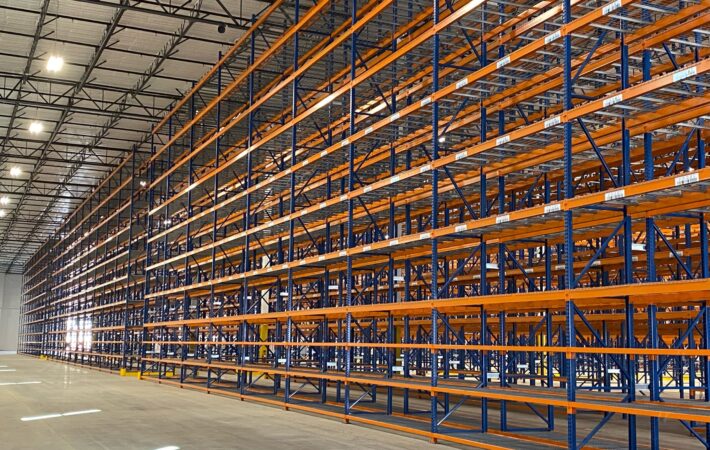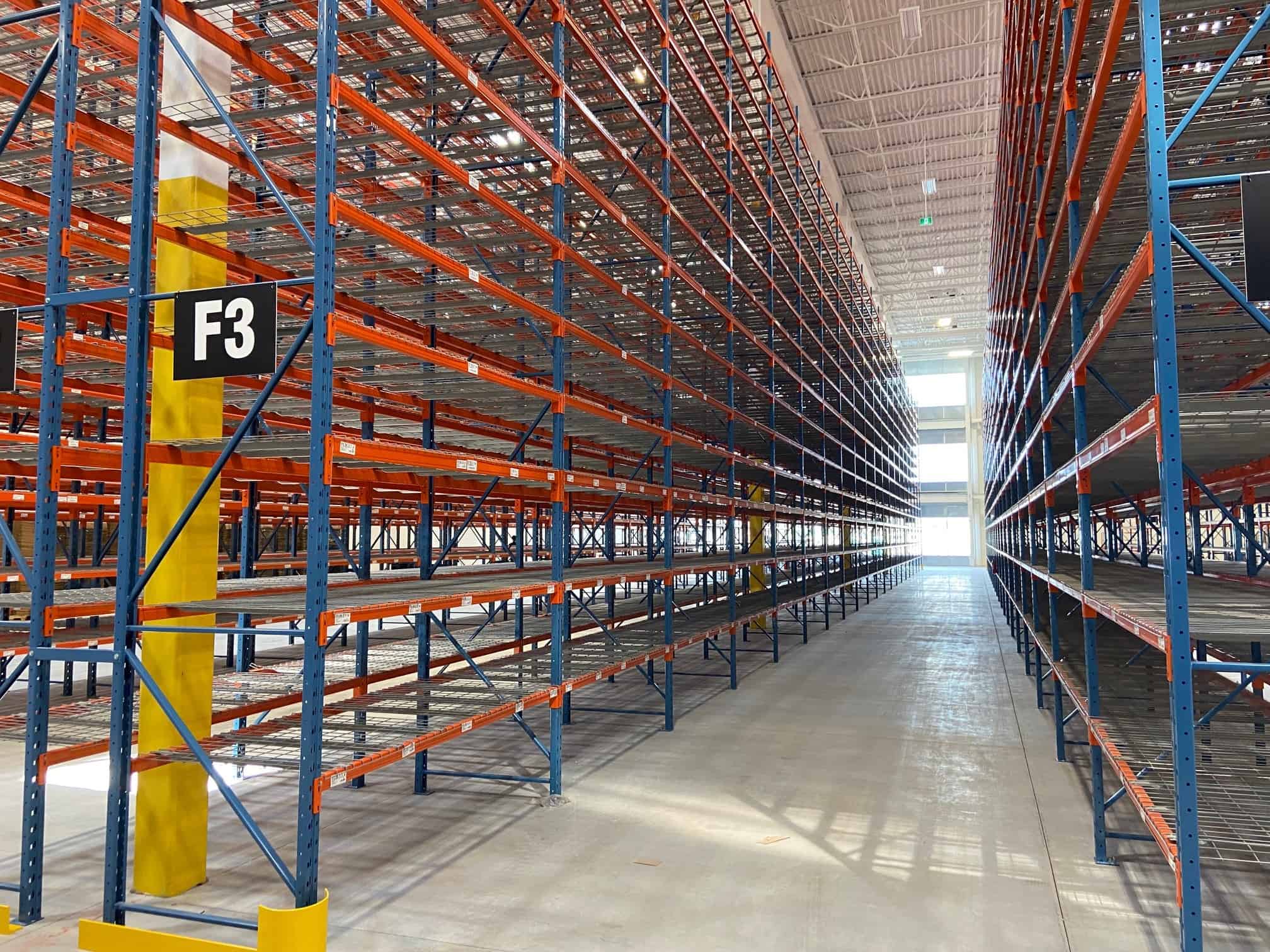
Adding pallet racking is one of the fastest ways to get more storage out of a warehouse without moving to a bigger building. But racking that’s planned in a rush can waste floor space, slow down forklift traffic, or limit what you can store later.
Here’s the step-by-step approach we use with customers to plan pallet racking that fits the building, the products, and the budget, whether you’re starting fresh or adding to an existing pallet racking system.
1. Start With What You’re Storing
Before measuring anything, get clear on your loads:
- Pallet size – Most North American pallets are 48″ x 40″, but check for oversized or non-standard pallets.
- Pallet weight – Know your heaviest typical load, not just the average. Beam capacity is rated per pair of beams, so this number matters.
- Load height – Measure the tallest loaded pallet, including the pallet itself.
- Number of pallet positions – How many do you need today, and how many in two to three years?
This information decides your beam length, beam capacity, and the vertical spacing between levels.
2. Measure the Building
Take accurate measurements of the space where the racking will go:
- Clear height – Measure to the lowest obstruction, such as sprinklers, lights, heaters, or roof beams, not just the ceiling.
- Floor dimensions – Note columns, doors, dock locations, and electrical panels.
- Floor condition – Racking is anchored to the concrete, so cracks, slopes, or thin slabs should be flagged early.
A simple sketch with dimensions is all we need to start a layout.
3. Choose Frame Height and Depth
Upright frames carry the whole system, so sizing them correctly is key.
- Frame depth is usually 42″ for a standard 48″ deep pallet, which lets the pallet overhang the beams slightly at the front and back.
- Frame height depends on your clear height, your forklift’s reach, and how many levels you want. Leave room above the top load for safe lift-off.
Taller isn’t always better. Your forklift’s maximum lift height often sets the real limit.
4. Pick the Right Beam Length and Capacity
Beams hold the pallets, and each pair has a rated capacity.
- 96″ beams are a common choice and typically hold two 40″ wide pallets side by side.
- 108″ to 144″ beams can fit wider loads or three smaller pallets, but they need higher-capacity beams.
- Always match the beam capacity to your heaviest load, and never overload a level.
Redi-Rack style beams lock into the uprights without bolts, which makes installation quick and adjustment easy if your product mix changes.
5. Plan Aisles Around Your Forklift
Aisle width has a bigger impact on storage capacity than almost anything else.
- Counterbalance forklifts usually need wider aisles, often around 12 to 13 feet.
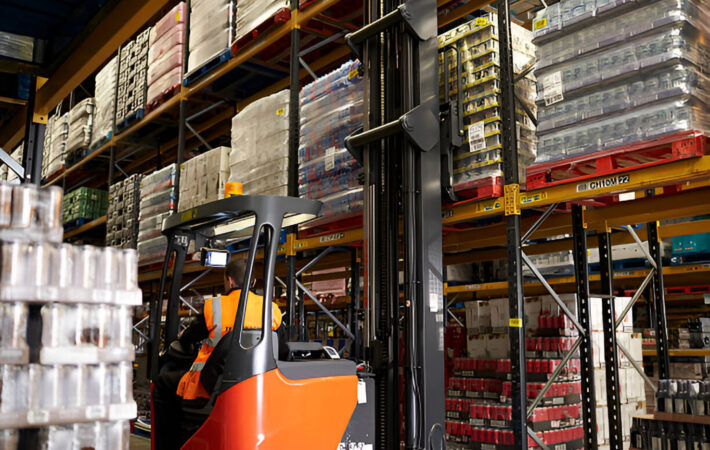
- Reach trucks can work in narrower aisles (9.5-10.5′) freeing up space for more racking.
Check your forklift’s specifications for its minimum right-angle stacking aisle, and add a little extra room for safe operation.
6. Think About Safety From Day One
A well-planned system is a safe system:
- Anchor every upright to the floor.
- Add column protectors or end-of-aisle guards in high-traffic areas.
- Use wire mesh decking or pallet supports where loads could fall through.
- Post load capacity signs on each bay.
- Inspect racking regularly for damaged uprights or beams.
Browse our pallet rack accessories for decking, guards, and other safety components. Depending on the height and type of installation, Ontario workplaces may also need to meet specific provincial safety review requirements, and we can help you figure out what applies to your project.
7. Leave Room to Grow
The cheapest time to plan for expansion is now. Leave space at the end of rows where you can add bays later, and choose a common frame and beam size so new sections match the existing system.
Common Mistakes to Avoid
- Measuring to the ceiling instead of the lowest obstruction
- Choosing beams based on average loads instead of the heaviest loads
- Making aisles too narrow for the forklift you actually own
- Forgetting about dock doors, fire exits, and sprinkler clearances
- Buying mismatched used components that aren’t rated to work together
Get Help Planning Your Racking
JB Equipment supplies new Redi-Rack style pallet racking at competitive prices, with stock components ready to ship fast and professional installation available. Send us your building measurements and pallet details, and we’ll help you lay out a system that fits your space and your budget.
Request a Racking Quote or call (905) 883-0316 or email info@jbequipment.ca.
Frequently Asked Questions
How much weight can pallet racking hold?
It depends on the beam size and length and the frame rating. Each beam pair and each upright frame has a rated capacity. Always size your system for your heaviest load.
What size pallet racking do I need for a 48″ x 40″ pallet?
A 42″ deep frame with 96″ beams is the most common setup. It holds two pallets per level.
How high can pallet racking go?
That depends on your building’s clear height, your forklift’s lift height, and the frame rating. Many warehouses use frames between 12 and 20 feet tall.
Can I add to my racking later?
Yes. Planning with standard frame and beam sizes makes it easy to add bays or levels as you grow.
Do you install pallet racking?
Yes. JB Equipment offers professional racking installation along with fast-shipping stock components.